Loading...
Engineer

Ductwork design for optimal air distribution

Invisible but essential, the duct network directs every cubic metre of conditioned air. Thoughtful layout, correct sizing, sealing, and insulation preserve static pressure, minimise noise, and keep your system efficient for decades.

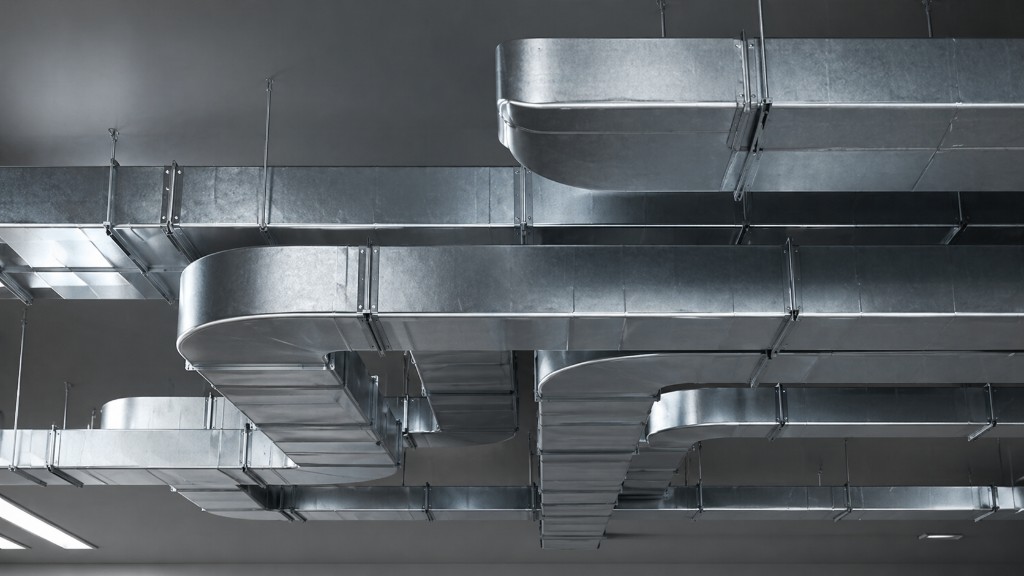
Commercial galvanized steel ductwork suspended from ceiling — radius bends, sealed flanges, engineered air distribution
Performance

Why ductwork design is non-negotiable

Air doesn't move by guesswork. Every transition, branch, and length changes pressure, velocity, and acoustics. Designing to code and to your load profile keeps comfort even, fans right-sized, and operating costs predictable.

Airflow

Airflow efficiency

Balanced runs and controlled velocities reduce turbulence and hot or cold spots—so every zone receives the design CFM without starving distant diffusers.

Balance

Pressure balancing

Specified static pressure targets, damper strategy, and commissioning ensure supply and return paths work together—preventing overworked fans and duct rumble.

Envelope

Insulation & condensation

Correct insulation R-values and vapour barriers on cold ducts limit surface condensation, fibre migration, and energy loss along long ceiling runs.

Acoustics

Noise control

Lined sections, bends away from collars, flex discipline, and low airspeeds near occupied zones cut breakout noise so systems stay felt—not heard.

Integrity

Leakage prevention

Sealed longitudinal seams, tested flange joints, and sealed penetrations keep leakage within class limits—preserving cooling capacity where it belongs.

Lifecycle

Long-term performance

A network that is inspectable, cleanable, and documented ages gracefully—instrument readings stay stable instead of creeping upward year after year.

Specification

Duct properties that separate average from excellent

Material choices, workmanship, insulation, airtightness, and maintenance access together determine how faithfully the duct system delivers today—and how easily it evolves with future tenants or loads.

01

Material quality & gauge

Galvanised steel or approved alloys with compliant thickness resist deflection under pressure. Specifying the correct grade avoids oil-canning noise and corrosion in aggressive environments.

02

Structural durability

Stiffeners, reinforcement, and hangers sized for seismic and vibration loads maintain alignment—keeping joints sealed and acoustics predictable over decades.

03

Insulation & cladding

External or internal liners with bonded vapour barriers protect against thermal bridging and condensation while keeping outer surfaces clean behind ceiling tiles.

04

Air leakage control

Leakage-tested assemblies and sealed connections ensure design CFM arrives at terminals—dramatically improving dehumidification and filter life.

05

Thermal efficiency

Reduced heat gain or loss through the duct shell keeps supply air at design temperature—and lowers chiller or coil duty across the compound.

06

Maintenance readiness

Adequate access doors, straight lengths compatible with rotary cleaning tools, and marked zones simplify inspection—a requirement for commissioning and ASHRAE-aligned IAQ upkeep.

Solutions

Five families of ductwork — advantages & best fit

Each duct type excels in particular geometries, acoustics budgets, cleanliness requirements, or speed of deployment. Matching the substrate to occupancy and risk profile is central to resilient design.

Rigid

Galvanised sheet metal ducts

The industry benchmark for mains and branches in commercial towers: fabricated to SMACNA standards with bolted flange or slip joints, enduring high pressures and repeatable layouts.

Commercial Industrial Premium residential
  • Superior strength, airtightness achievable with weld or seal tape systems
  • Ideal for kitchens, malls, laboratories, and long riser shafts
  • Compatible with spiral and rectangular profiles for optimised aspect ratios

Best when cleanliness standards are high (ease of wiping), future capacity upgrades likely, or fire/smoke partitioning must align with casing ratings.

Rigid

Aluminum ducts

Lightweight rectangular or spiral runs fabricated from aluminum alloy sheet—the same airtight rigidity as galvanized systems with lower hanger loads and inherent resistance to oxidation in humid or coastal exposures when specified and installed correctly.

Commercial Coastal & rooftop High-bay/industrial
  • Lower mass per linear metre—reduces structural demand on existing slabs and long ceiling spans
  • Naturally corrosion-resistant in many atmospheres; common for exposed exterior mains and salty-air sites
  • Compatible with flange and slip-fit jointing methods analogous to galvanized SMACNA practice

Strong candidates when duct weight drives hanger spacing, when enclosures are exposed or visible, or where chemical compatibility rules out bare steel—for aggressive exhaust streams pairing with appropriate gauges, liners, or coatings remains essential.

Adaptive

Flexible duct runs

Corrugated liners with metal helix reinforcement close the last metre to terminals where rigid duct cannot navigate tight soffits or ceiling variations.

Residential retrofit Variable ceilings
  • Rapid installs and forgiving routing offsets
  • Higher pressure drop unless kept short & fully extended
  • Prefer insulated jackets in attic or conditioned envelope transitions

Supports residential splits and cassette drops; limit length and avoid sharp compression—pair with attenuators if turbulence noise appears.

Acoustic

Fiberglass-lined metal ducts

A dual-wall construction with perforated inner sheets and fiberglass insulation absorbs high-frequency breakout—common in cinemas, theatres, and boardrooms chasing NC targets.

Commercial Auditoriums
  • Strong octave-band damping without bulky silencer banks
  • Requires moisture management protocols in humid climates
  • Interior surfaces must resist erosion from cleaning tools

Chosen when acoustics KPIs outweigh first cost; diligent sealing of liner edges prevents downstream fibre dispersion.

Industrial

Fabric dispersion systems

Volumetric ducts woven from specialised polyester distribute large volumes evenly through engineered porosity or calibrated nozzles—popular in warehousing, arenas, indoor agriculture, showrooms.

High-bay halls Factories Seasonal arenas
  • Washable membranes; lightweight hangers reduce structural load
  • Outstanding distribution uniformity over large footprints
  • Architectural collaboration fixes colourwash and egress lighting harmony

Best when occupants prefer draught-less cooling from above; less typical in tight residential footprints.

Collaborate

Model your duct backbone before metal hits the slab

Bring your drawings—we translate heat loads into balanced branches, diffuser selections, and acoustic allowances that install cleanly with the rest of the services package.