Loading...
Infrastructure

Chiller plant systems

Centralized cooling for large buildings using chilled water distribution

The core of large-scale cooling

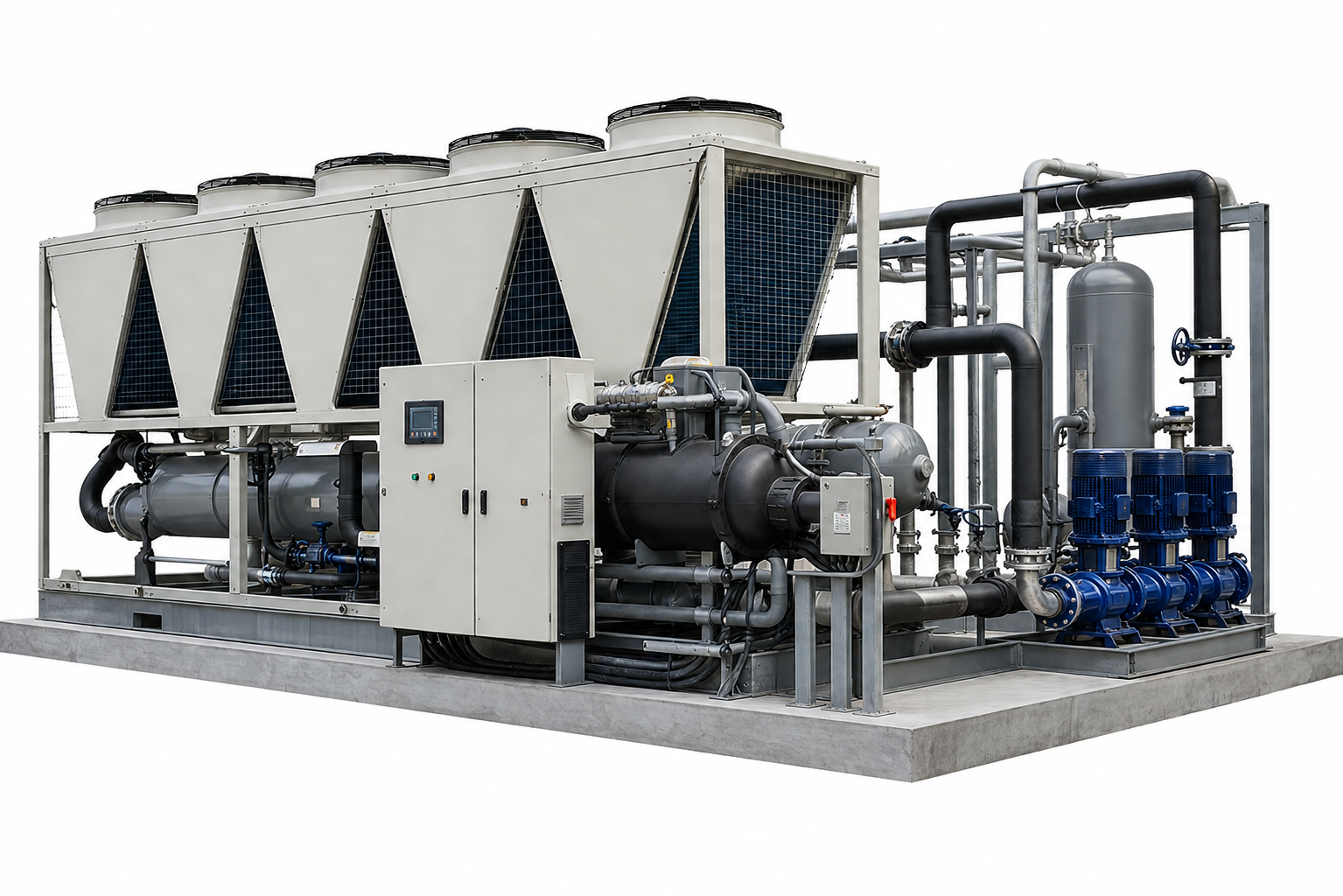
A chiller plant serves as the vital heart of centralized cooling systems, employing sophisticated refrigeration technology to chill water that circulates throughout entire buildings. This continuously flowing water absorbs excess heat from interior spaces and returns to the chiller to be cooled again through thermodynamic processes, creating a reliable cycle of temperature control year-round.

Process

The chiller removes heat from water

Refrigerant inside the chiller absorbs heat from the water, cooling it to the desired temperature. This chilled water is then pumped through pipes to air handling units positioned throughout the building.
Chiller plant process diagram
Benefits

Built for performance and efficiency

Chiller plants deliver superior energy performance at scale, reducing operational costs through optimized refrigeration cycles and smart load management across your entire facility.

Applications

Essential for large commercial facilities

From office towers and shopping malls to hospitals and data centers, chiller plants handle the demanding cooling requirements of large buildings that need reliable, centralized temperature control at scale.
Operation

How chiller plants deliver consistent cooling

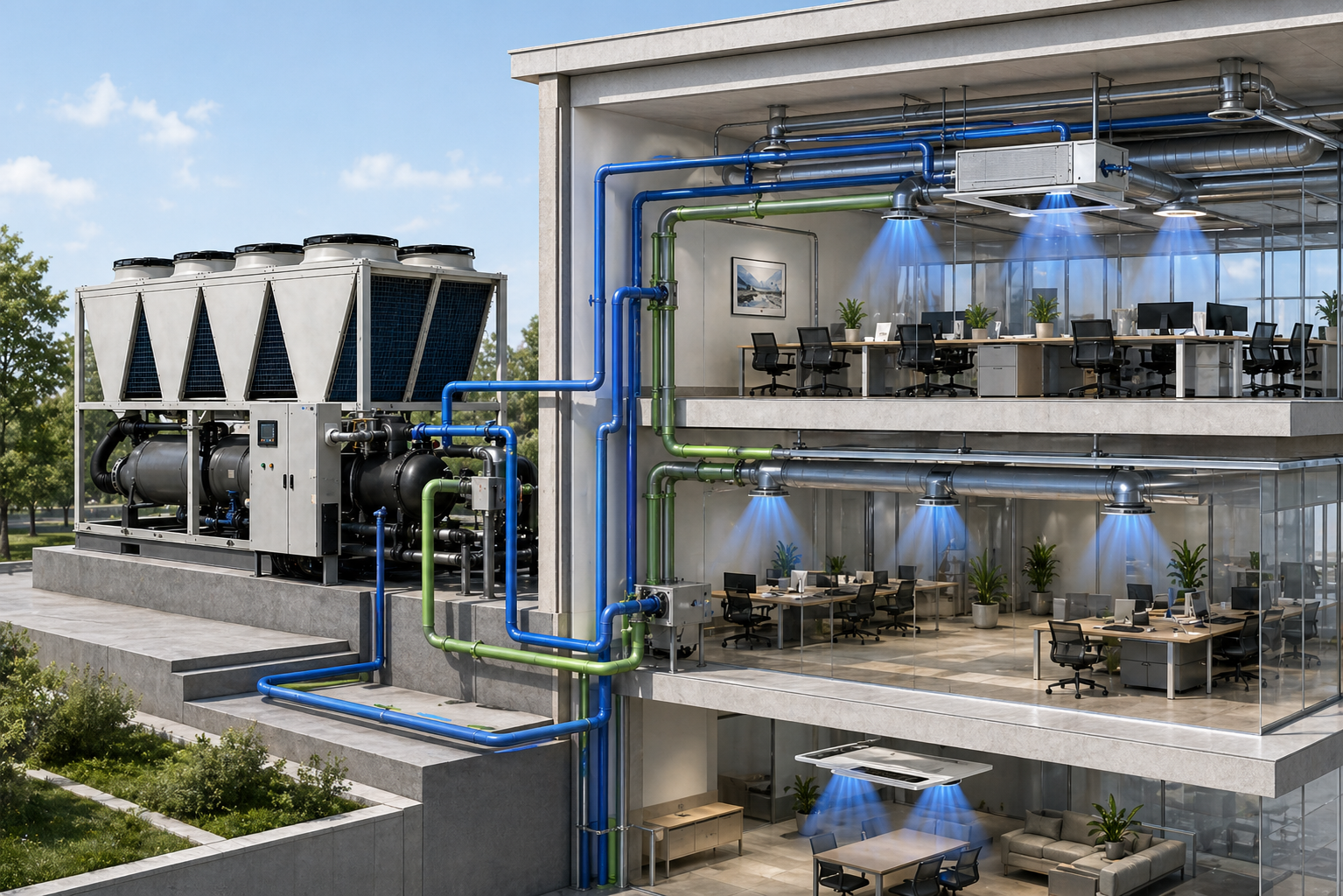
A chiller plant operates through a continuous refrigeration cycle that cools water for distribution across your entire facility.

Refrigeration begins the cycle

The chiller unit uses refrigerant to extract heat from water, cooling it to your specified temperature. This chilled water is then distributed through an extensive network of pipes to every zone requiring cooling.

Air handlers distribute the cold

Positioned throughout your building, air handling units pass the chilled water through their coils to cool incoming air. This conditioned air flows through ductwork to individual rooms and spaces, maintaining uniform temperatures.

The loop completes itself

Warmed water returning from the building re-enters the chiller, where the refrigeration cycle begins anew. This uninterrupted circulation ensures your facility stays cool and comfortable around the clock.

Chiller plant operation
Advantages

Why choose chiller plant systems

Chiller plants deliver superior performance for demanding cooling needs

Energy efficiency at scale

Reduced operating costs through optimized refrigeration and smart load management that adapts to real-time demand.

Reliable temperature control

Maintains precise cooling across multiple zones without fluctuation, ensuring consistent comfort and process stability.

Built for large facilities

Scales effortlessly to cool sprawling commercial and industrial spaces, from single-building deployments to entire campuses.

Applications

Where chiller plants keep large spaces cool

Chiller plants handle the substantial cooling demands of large buildings requiring reliable, centralized temperature control. From office towers and corporate campuses to hospitals and data centers, these systems prove essential for maintaining consistent comfort and optimal environmental conditions.

Commercial buildings need them

Office complexes, shopping centers, and hotels rely on chiller plants to cool multiple floors and zones simultaneously. The system adapts to occupancy changes and seasonal demands without losing efficiency.

Hospitals demand precision

Medical facilities require exact temperature control for operating rooms, patient wards, and sensitive equipment areas. Chiller plants deliver the consistency hospitals depend on for critical operations.

Data centers stay protected

Server rooms generate intense heat that threatens equipment and data integrity. Chiller plants provide the continuous, reliable cooling that keeps digital infrastructure running without interruption.

Next step

Engineer central cooling that scales

Discuss load profiles, redundancy, and plant room layout—we translate requirements into dependable chiller solutions.